
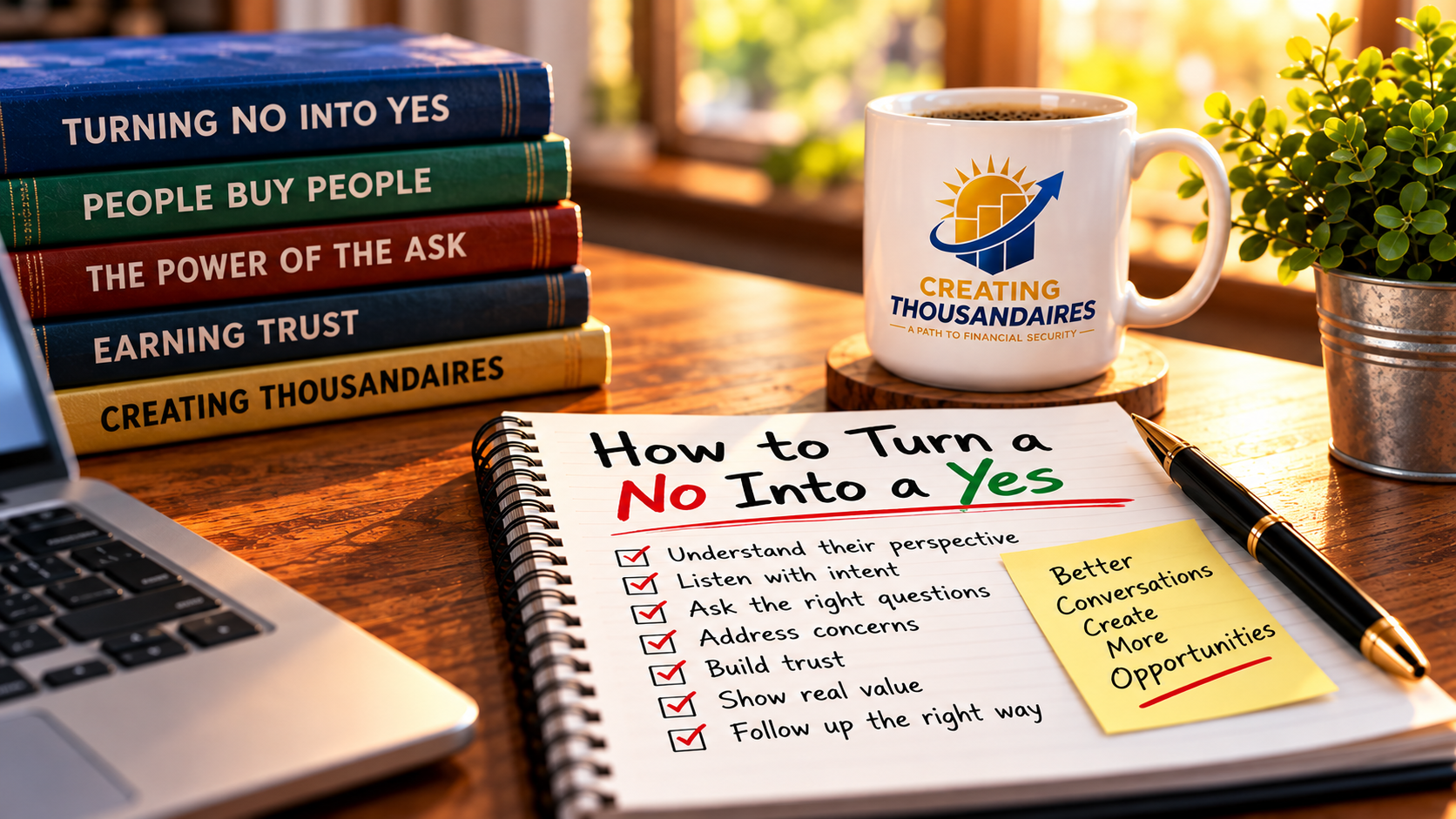
A no doesn't always mean the conversation is over. Sometimes it means there's something important you haven't understood yet.
When No Feels Like the End of the Conversation
Most of us have heard the word no more times than we can count. A customer doesn't want what we're offering. A manager turns down an idea. Someone we care about disagrees with our suggestion. It's easy to take that response personally—or immediately start arguing our case.
But a no isn't always a final judgment on you or your idea. Sometimes it means the other person isn't ready, doesn't understand the value, has a concern you haven't heard, or simply has different priorities.
I've spent nearly four decades working with people in sales, management, business ownership, and everyday situations where communication matters. One thing that experience has taught me is that pushing harder rarely creates the kind of agreement worth having. Understanding people usually gets you further.
The goal isn't to win every conversation. It's to leave the other person feeling respected, whether the answer changes or not.
First, Stop Treating No as a Personal Rejection
When someone says no, our instinct can be to defend ourselves. We talk faster, add more details, or repeat the same argument in a louder voice. Usually, that makes the other person more determined to hold their position.
Instead, give yourself a moment to be curious. Is the person worried about cost? Timing? A previous bad experience? Or is the offer simply not right for them? Those are very different situations, and they deserve different responses.
Not every no needs to become a yes. Respecting that fact is one of the quickest ways to build credibility.
Listen for the Concern Behind the Answer
Imagine someone tells a small business owner, 'I don't think this service is worth the price.' The owner could immediately list every feature and explain why the price is fair. But that response assumes the problem is price alone.
A more useful question might be, 'What part of the service feels least valuable to you?' The answer could reveal that the customer doesn't need a certain feature, worries about ongoing costs, or doesn't understand what is included.
Now the conversation has moved from defending a price to understanding a person. You may discover a better fit—or learn that there isn't one. Either outcome is more productive than a pressured sale.
Show That You Understand Before Offering an Answer
People are more willing to continue a conversation when they feel heard. That doesn't mean pretending to agree with every objection. It means acknowledging that the other person's concern makes sense from their point of view.
For example, if a colleague says a new process will take too much time, you might respond, 'I can see why you'd be concerned about adding another task to an already busy day.' That one sentence can lower the temperature of the conversation.
Only then is it useful to explore whether there's another way to approach the problem. Understanding should come before persuasion—not after it.
A Simple Introduction to Feel, Felt, Found
In my book Turning “No” Into Yes, I introduce a conversational approach called Feel, Felt, Found. At its simplest, it encourages you to recognize someone's concern, acknowledge that others have shared similar feelings when that is genuinely true, and offer a relevant perspective or experience.
It's not a script to recite mechanically. If you say something you don't believe, people can usually sense it. And if you use it to dismiss a legitimate concern, it defeats the purpose.
Think of it as a reminder to respond with empathy before explanation. The deeper skill is learning how to recognize the right moment, choose honest language, and adapt your response to the person in front of you. That's where practice makes a difference.
Ask Questions That Open Doors
A good question can accomplish more than a five-minute speech. Instead of asking, 'Why won't you do this?' try something less confrontational: 'What would you need to feel comfortable moving forward?'
Or ask, 'Is there one part of this that concerns you most?' Those questions invite a real answer rather than a defensive reaction.
The key is to listen after you ask. If you already have your next argument prepared, you may miss the very information that could help you understand the situation.
Know When to Let the Answer Stay No
This is especially important in sales, leadership, and personal relationships. A person has the right to decline. Continuing to push after a clear decision can damage trust, even if your intentions are good.
Sometimes the best response is, 'I understand. Thanks for considering it.' That leaves the door open for a future conversation without making anyone uncomfortable.
I've seen relationships lead to opportunities years later—not because someone won an argument, but because they handled a disagreement with respect. A good reputation is worth more than one reluctant yes.
Try One Small Change in Your Next Conversation
The next time someone disagrees with you, resist the urge to explain immediately. Ask one sincere question about their concern, listen to the complete answer, and acknowledge what you heard.
Notice whether the conversation feels different. You don't need to master an entire communication system in one day. Start by replacing one defensive response with genuine curiosity.
If you want to go further, structured examples, practice exercises, and feedback can help turn a promising idea into a reliable skill. Reading an introduction is useful; applying it in real conversations is where growth happens.
Coffee with Dave: A Final Thought
I've learned that the strongest relationships aren't built by getting our way every time. They're built by how we treat people when we don't get our way.
A no can be frustrating. But it can also be an invitation to listen more carefully, ask a better question, or discover that someone sees the situation differently than we do.
When you stop trying to overpower objections and start trying to understand people, better conversations become possible. And better conversations often create better opportunities.
— Dave
Want to Go Beyond the Basics?
This article is an introduction to a much bigger skill: navigating objections while building genuine trust. The Turning “No” Into Yes Masterclass explores the Feel, Felt, Found approach in more depth, with guided lessons and practical exercises designed to help you use it naturally.